A1 Miami Locksmith Pros Service Team
Local locksmith team
Jul 6, 2026 15 min read

If you live near Brickell, Coconut Grove, or anywhere along Miami's coastline, you already know what salt air does to a car or a patio set. What most homeowners and drivers don't realize is that the same invisible corrosion quietly attacks their door hardware every single day. Miami's combination of ocean humidity, salt particulates, and year-round heat creates one of the harshest environments a lock can face in the entire country — and most people only notice the damage after a key snaps off in a frozen cylinder or a door refuses to latch on the way out the door at 7 a.m.
This guide is for anyone who has ever felt a lock getting stiffer season by season and wondered whether to worry about it. We'll walk through exactly how coastal air degrades mortise locks, door knob locks, and deadbolts, what early warning signs to watch for, and the straightforward maintenance steps that can add years to your hardware. Where prevention isn't enough, we'll also cover when it makes sense to change a lock entirely — and how our team at A1 Miami Locksmith Pros can help you do that quickly and correctly.
## Why Salt Air Is a Lock's Worst Enemy (Especially in Miami)
Salt air is corrosive because sodium chloride particles dissolve in moisture and form a weak electrolytic solution. When that solution settles into the tiny internal chambers of a lock — the shear line, the pin stacks, the cam mechanism — it begins oxidizing metal surfaces that were never designed to be exposed to the elements. In a dry inland climate this process takes decades. In Miami's coastal environment, particularly in neighborhoods like South Beach, Edgewater, and Key Biscayne, measurable corrosion can begin within months on unprotected hardware. The problem is invisible at first: springs lose a fraction of their tension, pins seat unevenly, and the tolerances that make a lock work smoothly start to close up.
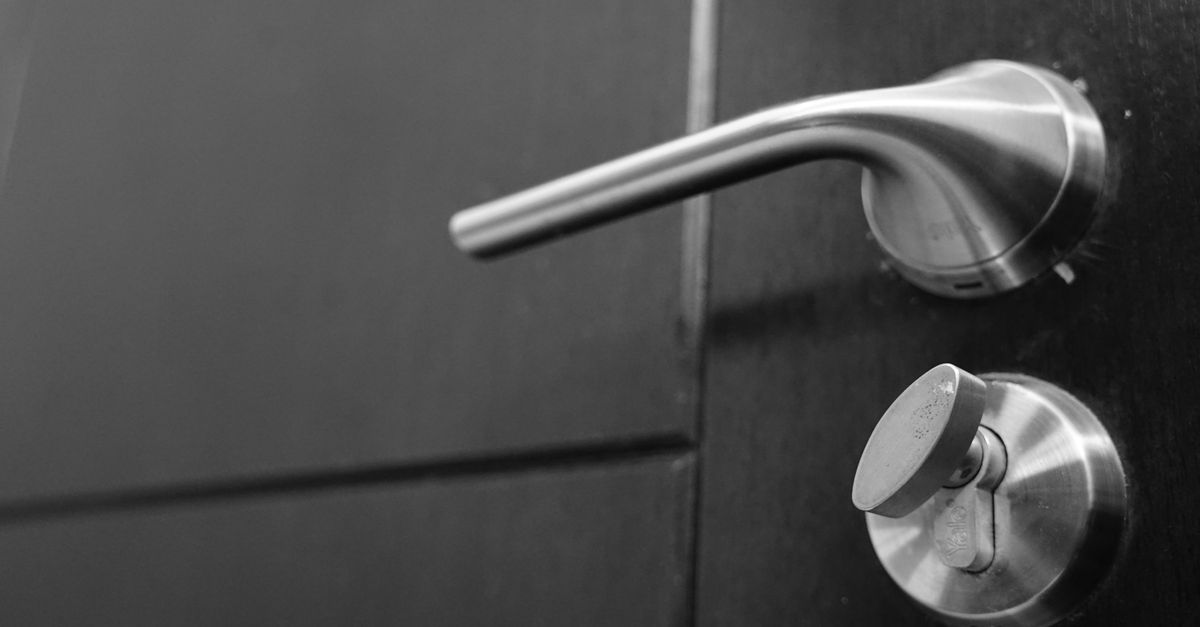
Mortise locks — the rectangular-body locks recessed into the edge of a door, common in Miami's older Art Deco buildings and many newer condominium towers — are especially vulnerable because they have more moving parts than a standard cylindrical lock. The lever-actuated latch, the deadbolt throw, the inside turn-knob mechanism, and the cylinder itself all have to coordinate precisely. When corrosion enters the picture, those parts bind against each other instead of gliding. The result is a lock that feels gummy, requires extra force, or occasionally refuses to turn at all. A sticky mortise lock is never a small problem to ignore; it tends to fail completely, and often at the worst possible moment.
## Spotting the Early Warning Signs Before a Lock Fails
The good news is that salt-air damage rarely strikes without warning. The trouble is that homeowners tend to adapt to a gradually stiffening lock the same way they adapt to a squeaky hinge — they just push a little harder and forget about it. Here are the specific signals worth taking seriously: your key requires noticeably more force than it did six months ago; the latch doesn't fully retract when you turn the knob or handle; the deadbolt travels part of the way and then stops before reaching full extension; you hear grinding or a subtle crunching sensation through the key when you turn it; or the lock works fine in the cool morning but binds up in the afternoon heat. That last one is a classic Miami tell — corrosion narrows internal tolerances, and metal expansion in the afternoon sun removes whatever margin was left.
For drivers, the same physics apply to car door locks and trunk cylinders. If a key-operated lock on a vehicle parked near the water is getting hard to turn, or the interior power-lock mechanism sounds labored, salt corrosion is a likely cause. Ignoring it can result in a locked vehicle with a cylinder that won't respond to either the key or the fob — a situation that calls for an emergency locksmith visit rather than a quick fix. Catching the problem while it's still a stiff cylinder rather than a seized one is always the better outcome.
## How to Change a Lock or Rekey It — and When Each Makes Sense
When a lock reaches the point where lubrication and cleaning aren't restoring smooth operation, you have two practical paths: rekey the lock or replace it entirely. Understanding the difference matters because the right choice depends on the condition of the hardware. Knowing how to rekey a lock in simple terms means having a locksmith disassemble the cylinder and swap the internal driver pins for a new set that matches a different key. This is fast, keeps your existing hardware, and is the right call when the lock body and cylinder are structurally sound but you just need a new key profile — such as after moving into a new home or after a key goes missing. Rekeying does nothing for corroded internals, though. If the springs are weak or the plug is pitted, rekeying just gives you a new key that operates a deteriorating lock.
When corrosion has compromised the mechanism itself, the answer is to change the lock. Knowing how to change a door lock properly means selecting hardware rated for coastal exposure — look for locks with solid brass or marine-grade stainless internals, and ANSI Grade 1 or Grade 2 ratings — and fitting them correctly so weatherstripping and door gaps don't create new moisture entry points. For a standard cylindrical knob or lever, a skilled homeowner can manage a swap with basic tools. Mortise lock replacement is a different matter: the pocket in the door edge must match the new lock body's dimensions precisely, the strike plate has to align perfectly, and the trim has to seat flush. A misaligned mortise lock will feel wrong from day one and wear out prematurely. Our team handles mortise lock replacement regularly across Miami and can confirm an exact up-front price before any work begins — the final quote reflects the lock type you choose, the door configuration, travel distance, and time of service. If you'd rather not wait and want to talk it through now, call (305) 360-8370 — we answer 24/7.
## Practical Maintenance That Actually Works in Coastal Conditions
The single most effective maintenance step Miami homeowners can take is lubrication with the right product on a consistent schedule. Standard WD-40 is a water displacer, not a long-term lubricant, and it tends to attract dust and gum up pin chambers over time. For lock cylinders in a salt-air environment, use a dry PTFE (polytetrafluoroethylene) spray or a graphite-based product. These don't attract particulate matter and hold up in humidity far better than petroleum-based products. Apply a light spray into the keyway, insert the key, and work it in and out several times to distribute the lubricant through the pin stacks. For mortise lock bodies and door knob lock mechanisms, a small amount of white lithium grease on the latch bolt and deadbolt throw — not inside the cylinder — keeps the mechanical components moving freely. Do this every three to four months in a coastal zip code; every six months if you're further inland.
Beyond lubrication, a few structural habits extend hardware life significantly. Install a door sweep or threshold seal if you don't already have one — not primarily for energy efficiency, but because salt-laden ocean breeze enters through door gaps and deposits directly on lock hardware. Check that your exterior door has an adequate overhang or storm shield above it; locks on fully exposed doors in Coconut Grove or Miami Beach age noticeably faster than those with even a few inches of weather protection. If your building has a keypad door lock, keep the keypad face clean with a dry cloth — salt residue on the buttons can work its way into the electronics and cause the kind of erratic behavior that makes homeowners wonder how to change the code on a keypad door lock when the real problem is actually a fouled contact. Changing the code on a door lock or resetting it is straightforward when the hardware is clean and functional; when salt has gotten into the electronics, a code reset won't solve the underlying fault.
## Full-Service Locksmith Miami and Wynwood — 24-Hour Availability for Every Lock Situation
A1 Miami Locksmith Pros operates as a fully mobile, 24-hour service covering Miami and the surrounding area — including Wynwood, Little Havana, Aventura, Doral, Hialeah, and the beach communities from South Beach to Sunny Isles. Our team handles residential and commercial locksmith work across all hardware types, and mortise lock service is one of our core specialties. We work on the full range of situations that coastal living creates: corroded cylinders that need replacing, door knob lock mechanisms that have seized, rekeying after a lease change, smart lock installations, and full lock changeouts on older doors where the original hardware has simply reached the end of its service life. On the commercial side, we regularly service multi-point mortise systems in office buildings, retail storefronts, and the kind of heavy-use entry doors that face Miami's humidity every hour of every day.
Here is a representative picture of what our service menu covers: residential lockout assistance, commercial lockout response, mortise lock repair and replacement, cylindrical lock installation, deadbolt installation and upgrade, door knob lock repair, smart lock and keypad lock installation, keypad door lock code reset support, rekeying residential locks, rekeying commercial locks, master key system design and setup, high-security lock upgrades, lock hardware consultation for coastal environments, car lockout service, motorcycle lockout service, ignition cylinder repair, transponder key cutting and programming, key fob replacement, key duplication, broken key extraction from cylinders, door frame and strike plate reinforcement, sliding door lock repair, garage door lock service, safe opening and combination change, padlock and hasp replacement, access control system support, intercom and buzzer lock integration, window lock inspection and replacement, mailbox lock replacement, and storage unit lock service. Whether the call comes in at noon or 3 a.m., we dispatch a trained technician with the tools and parts most likely needed for that specific job — and we always confirm your exact price before any work starts. Call (305) 360-8370 any time — day or night, we're on.
## Related Cost Information — What Determines Your Locksmith Quote in Miami
One of the most common questions we hear is some version of: how much does a locksmith cost in Miami, or how much does a local locksmith charge, or what is a locksmith call-out fee? These are fair questions, and the honest answer is that locksmith pricing in any city reflects several real variables rather than a single flat rate. The factors that shape your quote include the type of lock involved (a standard knob lock costs less to service than a full mortise lock body with a multi-point mechanism), whether parts need to be sourced or are already on the truck, the time of the service call (evening and overnight calls carry a different rate than midday ones), and how far the technician needs to travel to reach your location. How much does an emergency locksmith cost near me is a slightly different question — emergency calls, by nature, involve immediate dispatch at any hour, and that urgency is reflected in the pricing structure.
How much is the average locksmith charge? There is no single average that is meaningful without knowing the job details, and any quote you receive over the phone without a description of the specific lock type and situation should be treated cautiously. At A1 Miami Locksmith Pros, we give you a clear, confirmed price before a single screw turns. No surprise line items added at the end of the job. How do I know if a locksmith is legit? Look for a team that arrives in a marked vehicle, asks to see proof of ownership or residency before beginning work, provides a written or clearly stated price before starting, and is willing to answer your questions about the work being done. Our technicians do all of these things on every call, because that's what a trustworthy service looks like in practice.
## Popular in Miami — Lock Upgrades Worth Considering for Coastal Homes
If you're already dealing with a corroded lock, the replacement conversation is a good opportunity to upgrade to hardware that's built to last longer in Miami's environment. A few options our customers ask about most often in coastal neighborhoods: solid brass mortise lock bodies, which resist oxidation far better than zinc-alloy castings and are worth the added investment for exterior doors; Grade 1 deadbolts with stainless bolt throws and hardened strike plates — the strike plate and its screws are often the first thing to corrode and the last thing homeowners check; and keypad door locks with sealed keypads rated for outdoor use, which eliminate the metal key cylinder as a corrosion entry point altogether. In Wynwood and the Design District, where many buildings have both aesthetic and security requirements, decorative mortise sets with marine-grade internals have become increasingly popular because they handle the salt-air environment without requiring replacement every few years.
In other nearby areas — including Coral Gables, Kendall, and Homestead — the salt-air effect is less aggressive than on the barrier islands, but the high ambient humidity still accelerates corrosion compared to what hardware manufacturers typically test for in lab conditions. If your home or business is within a few miles of the water, treat your locks the same way you'd treat any other coastal hardware: inspect them, maintain them on a schedule, and don't wait for a full failure before taking action.
## You Might Also Like — Smart Habits That Extend Lock Life Year-Round
A few things that pair well with everything covered above: if you have multiple entry points — a front door, a back door, a garage side entry — make it a habit to use and lubricate all of them regularly. Locks that sit unused for months can seize more readily than ones that are exercised daily, because the lubricant settles and the mechanism has no reason to keep its parts moving freely. Consider a seasonal inspection of all exterior hardware in April (before summer storm season intensifies the humidity) and again in November. On the car side, if you drive a vehicle and park it outside in a coastal zip code, a light PTFE spray into the door lock cylinder twice a year is genuinely worth the two minutes it takes. And if you're ever in a lockout situation and find yourself curious about how to pick a door knob lock or how to pick a lock door knob — the practical answer for a legitimate owner is always the same: call a professional. Verification of ownership is part of any proper locksmith call, and it protects you as much as it protects the security of the property. Attempting improvised bypass techniques almost always causes additional damage to an already stressed cylinder, turning a simple service call into a full replacement.
Frequently asked questions
How do I know if a locksmith is legit?+
A trustworthy locksmith will arrive in a vehicle that identifies the company, ask for proof that you own or have rights to the property before beginning work, give you a clear confirmed price before starting, and be willing to explain what they are doing and why. Be cautious of any service that quotes an unusually low price over the phone and then presents a significantly higher bill at the door — that pattern is a known red flag in any city. Our team at A1 Miami Locksmith Pros follows proper ownership verification on every call and provides your exact price before any work begins. You can reach us at (305) 360-8370 to ask questions before you commit to anything.
How much does an emergency locksmith cost near me, and what is a call-out fee?+
Emergency locksmith pricing reflects a few real factors: the type of lock or vehicle involved, what parts are needed, the time of day, and how far the technician needs to travel. A call-out fee, when it applies, covers the cost of dispatching a technician to your location — but the way that fee is structured varies by company. At A1 Miami Locksmith Pros, we confirm your complete up-front price before any work starts, so there are no surprise additions when the job is done. The best approach is to describe your specific situation when you call so we can give you an accurate quote rather than a vague range.
When should I rekey a lock versus replace it entirely?+
Rekeying makes sense when the lock hardware itself is in good working condition and you simply need a new key — after moving into a home, after losing a key, or after a change in who has access. It is faster and keeps your existing hardware. Replacement is the right call when the lock mechanism has deteriorated — stiff operation, corrosion damage, broken internal components, or hardware that is simply too old to function reliably. In Miami's salt-air environment, exterior locks that haven't been maintained regularly often need replacement rather than rekeying because the internal parts are compromised. A quick inspection by one of our technicians can tell you definitively which path makes sense for your specific hardware.
My keypad door lock is behaving erratically. Do I need to change the code or replace the lock?+
Erratic behavior in a keypad lock — buttons that don't register, codes that work inconsistently, or a lock that cycles through modes on its own — can have a few causes. In Miami's coastal climate, salt residue on the keypad face and moisture ingress into the electronics are common culprits, and cleaning the face of the unit is always worth trying first. If the issue persists, it may point to a failing battery, a corrupted code memory, or actual corrosion inside the unit. Knowing how to change the code on a door lock or how to change the code on a keypad door lock is straightforward in most brands — the manual for your specific model will walk you through it — but if a code reset doesn't resolve the erratic behavior, the hardware itself likely needs to be inspected or replaced. Our team can diagnose the specific fault and advise you on whether a reset, a repair, or a new installation is the right answer.